
Gaming has solved distribution and scale. It has not solved cohesion or trust. As play becomes platform agnostic, identity, discovery, and reputation remain scattered. Lumin has rebuild that social layer with structure rather than noise.
8 min read • Mar 2 2026
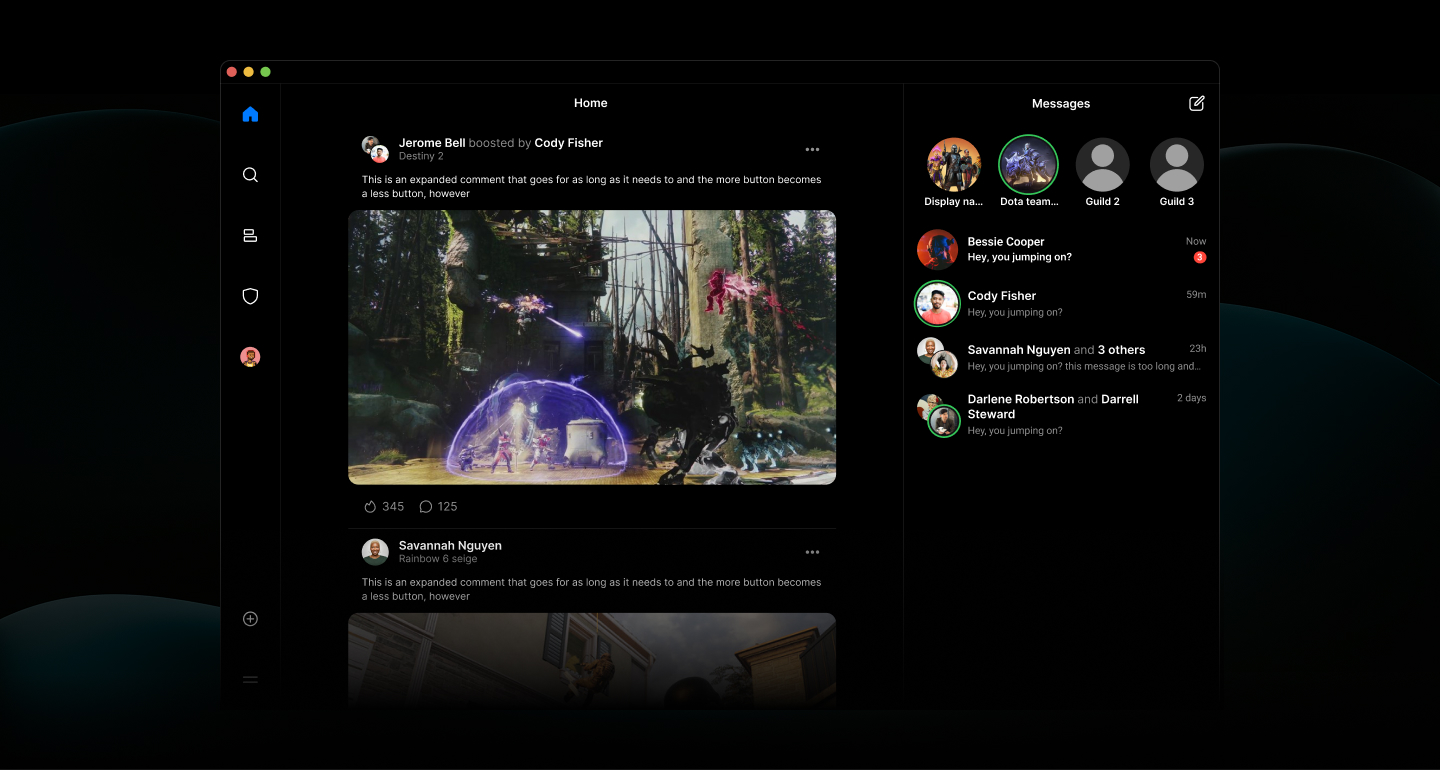
Gaming is larger, faster, and more accessible than at any point in its history. Cross platform play is normal. Subscription libraries expand monthly. Storefronts release hundreds of titles each year. What has not evolved at the same pace is the infrastructure around the player.
Today, a player’s identity is fragmented. Clips live on one platform. Reviews sit on another. Achievements and friends lists are locked inside ecosystems. Community conversations unfold in private servers. Each space performs a narrow function, but none accumulate into a coherent profile of taste, credibility, or contribution.
The industry has built powerful systems for selling and distributing games. It has not built a durable, portable social layer that belongs to the player.
The abundance of games has created a second problem: discoverability at scale.
Storefront algorithms privilege momentum. Social feeds privilege spectacle. Review averages flatten nuance. For large publishers, this model is workable. For independent studios, visibility often hinges on timing rather than sustained design quality.
For players, the result is overload. There is more choice than ever, but less clarity about what actually aligns with their taste. Discovery today is efficient but shallow. It surfaces what is popular, not necessarily what is compatible.
Gaming identity once revolved around hardware. Console loyalty functioned as cultural shorthand. As ecosystems open and subscriptions blur boundaries, identity is migrating away from devices and toward individuals.
Yet there is no structured system that meaningfully captures player reputation. Clip culture measures moments. Follower counts measure reach. Star ratings measure consensus. None measure credibility.
Lumin’s central proposition is that credibility can be contextual. A review is not simply a number but a signal shaped by behaviour, genre familiarity, and consistency. A player who repeatedly engages with strategy games carries more authority in that domain than someone who plays it once.
This is the logic behind weighted reviews. It shifts emphasis from loudness to alignment. Instead of asking, “What is the average score?” the more relevant question becomes, “Whose opinion should matter to me?”
That distinction reframes discovery as compatibility rather than consensus.
Short form gaming clips dominate contemporary social platforms. They are dynamic, accessible, and highly shareable. However, detached from context, they are disposable.
Lumin treats clips not as endpoints but as entry points. A highlight can lead to a player profile, a history of reviews, a pattern of engagement. In this framing, culture accumulates rather than evaporates.
The shift is subtle but significant. Instead of optimising solely for virality, the platform attempts to build continuity. Moments connect to identity. Identity connects to trust.

Most dominant gaming ecosystems are vertically integrated, combining hardware, storefront, identity, and community under a single corporate structure. Lumin is structurally different. It is designed to sit alongside these systems rather than replace them.
In a period defined by consolidation and subscription expansion, an independent social layer carries strategic implications. If discovery and reputation exist outside storefront control, players gain portability. Developers gain alternative routes to visibility. Influence becomes less centralised.
This is not an anti platform argument. It is an argument for player centric infrastructure.
Several industry shifts make this moment particularly relevant. Cross platform play reduces ecosystem boundaries. Subscription models reshape purchasing habits. Independent releases accelerate. Skepticism toward traditional review models grows.
Gaming does not lack content. It lacks structure around that content.
As access becomes universal, the differentiator may no longer be hardware or even libraries, but the systems that organise meaning, credibility, and discovery.
Lumin is laying the foundations for a different kind of gaming infrastructure. A response to structural gaps the industry has tolerated for too long.
Players will continue to share clips. They will continue to write reviews. The open question is where those contributions accumulate into something coherent and durable.
The next phase of gaming infrastructure may not be louder feeds or larger libraries, but structured reputation and contextual discovery. Lumin is positioning itself at that intersection.


